
Ultra-Thin Prescription Lenses: Who Really Needs Them?
Ultra-thin prescription lenses are often described as lighter, slimmer, and more attractive than regular lenses. That is true — but not everyone actually needs them. The real question is not whether ultra-thin lenses look better. The real question is whether they make sense for your prescription, your frame, and the way you wear glasses every day. At Nam Quang Optical, this is the kind of choice that should be guided by prescription and fitting, not by marketing alone. Nam Quang’s own lens content describes ultra-thin lenses as high-index lenses that are lighter and thinner than standard lenses, while its homepage presents a refraction team with years of hands-on experience in measurement and lens fitting.

Store locations:
- 53 Nguyễn Trãi, Ward Bến Thành, District 1, HCMC (View maps)
- 670 Sư Vạn Hạnh, Ward 12, District 10, HCMC (View maps)
What are ultra-thin prescription lenses?
Ultra-thin prescription lenses are lenses made from higher-index materials, which bend light more efficiently than standard lens materials. Because of that, the lens can achieve the same prescription with less bulk, making it thinner and lighter than a regular lens. The competitor article explains the same idea in simple terms, while Nam Quang’s own guide defines tròng siêu mỏng as lenses with higher index, lower thickness, and lighter weight.
In Nam Quang’s lens content, ultra-thin lenses are described as being roughly 20–30% lighter than standard lenses, and better for wearers who want improved comfort and a cleaner look. Nam Quang also notes that higher-index lenses usually cost more because they use more advanced materials and manufacturing.
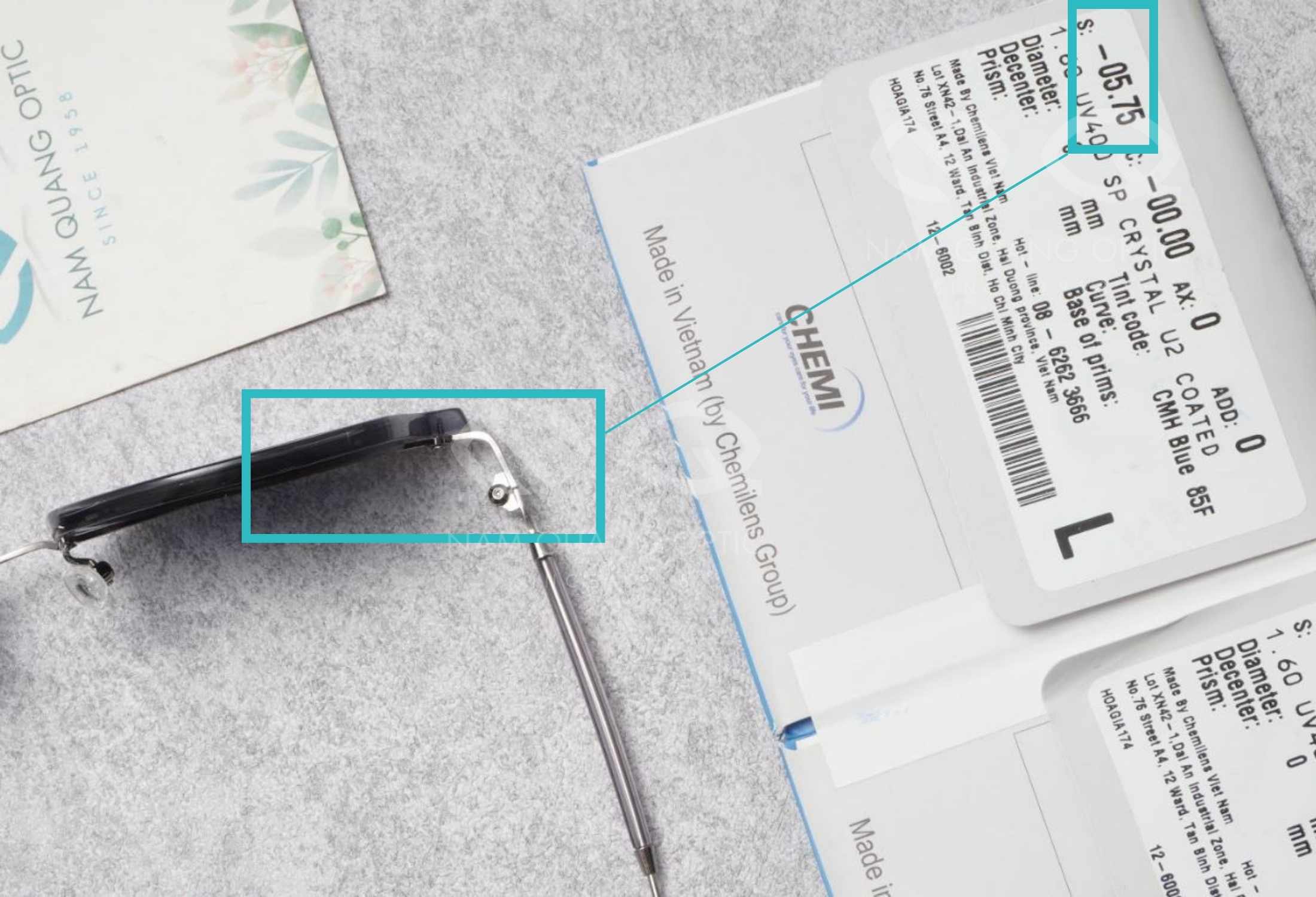
Who actually needs ultra-thin lenses?
This is where buyers usually need honest advice. Ultra-thin lenses are most useful for people with medium to high prescriptions, especially when standard lenses start to feel bulky, heavy, or cosmetically distracting. Both the competitor article and Nam Quang’s own lens guide point in that direction: higher refractive errors benefit the most, while mild prescriptions often do not need the thinnest option.
You should seriously consider ultra-thin lenses if:
- your prescription is high enough that the lens edge becomes noticeably thick
- your glasses feel heavy on the nose after long wear
- you want a slimmer look, especially with thinner or more refined frames
- you are sensitive to the “tiny eyes” or “bulging lens” cosmetic effect that thick lenses can create
Those use cases align with the practical concerns described in both sources: comfort, appearance, and better suitability for stronger prescriptions.
When you may not need them
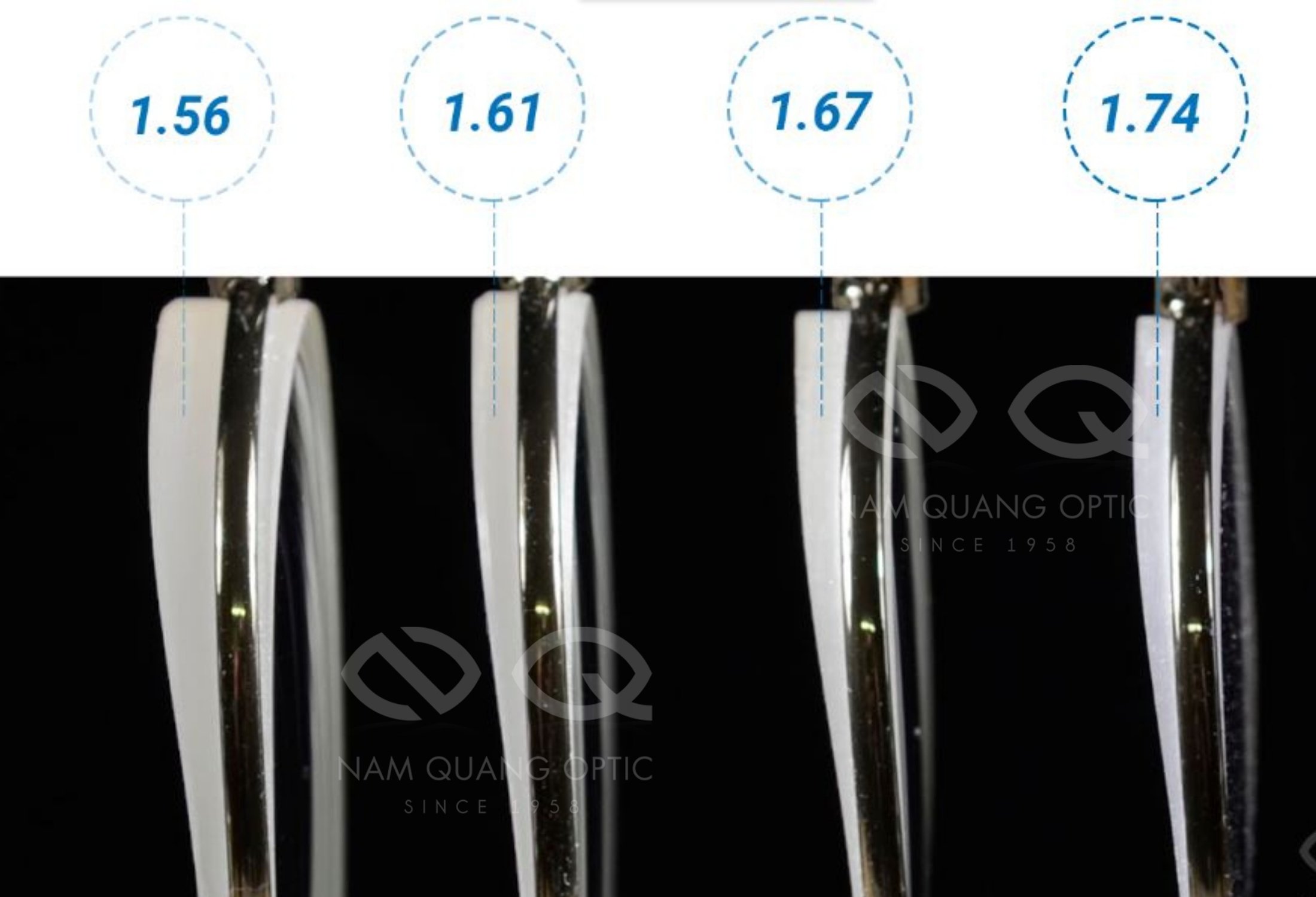
This is the part many sales-driven articles skip. If your prescription is low, going straight to the thinnest lens is often unnecessary. Nam Quang’s own recommendation table suggests that lighter prescriptions can still work well with 1.56 or 1.60, while stronger prescriptions are where 1.67 or 1.74 become more meaningful. That means paying for 1.74 when your prescription is mild may not give you enough real-world benefit to justify the extra cost.
The competitor article also says ultra-thin lenses are not typically intended for people without prescription needs or only very mild correction. In other words, “thinner” does not automatically mean “better for everyone.”
How to choose between 1.56, 1.60, 1.67, and 1.74
This is where Nam Quang’s content is much more useful than a generic blog post. Its guide suggests the following direction for choosing index based on prescription:
- around 0 to 2.50: 1.56 or 1.60
- around 2.75 to 3.50: 1.60 or 1.67
- stronger prescriptions beyond that: 1.67 or 1.74
- 7.25 and above: 1.74 is the recommended direction in the guide
That does not mean index should be chosen by prescription alone. Frame shape and size matter too. Larger frames usually expose more lens edge, so even a moderate prescription can look thicker in an oversized frame. Nam Quang’s guide also emphasizes choosing lenses to suit the frame, not treating lens choice as a separate decision.
Real advantages of ultra-thin lenses
The biggest advantage is simple: better comfort without losing prescription performance. If your current glasses feel heavy, slide down often, or look much thicker than you want, ultra-thin lenses can make daily wear easier. Nam Quang’s content specifically highlights lighter weight, better comfort, higher aesthetics, and access to modern add-ons such as UV protection, blue-light filtering, or photochromic features.
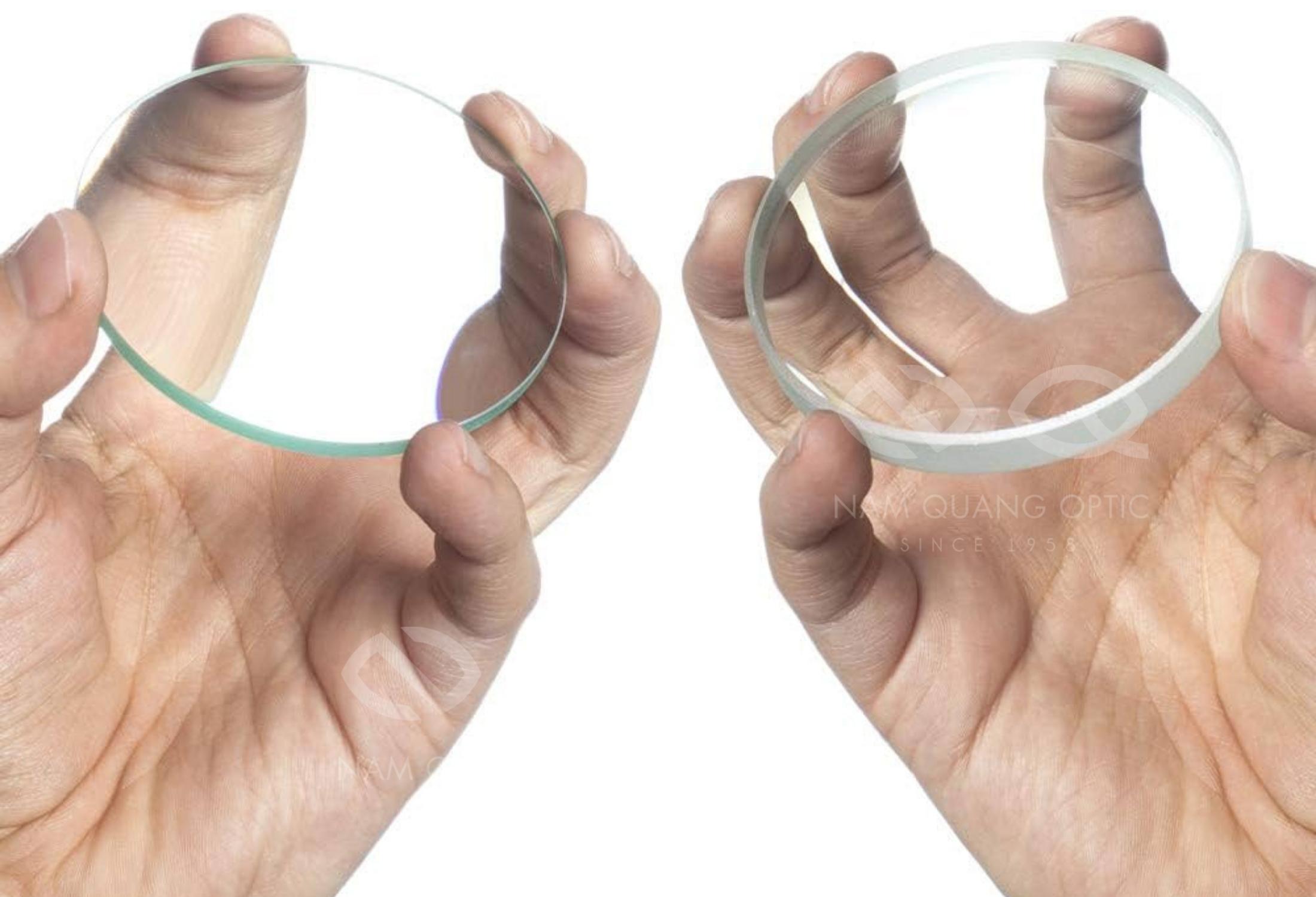
Another benefit is appearance. Thicker lenses can look bulky and may distort the look of the eyes more strongly. Nam Quang’s article notes that lens thickness affects both comfort and the image perceived by the wearer, and that thick lenses can create more visual and cosmetic drawbacks than thinner high-index options.
Real drawbacks of ultra-thin lenses
The main drawback is price. Nam Quang’s lens pages and the competitor article both make that clear: ultra-thin or high-index lenses cost more than standard lenses because of their material and manufacturing complexity. The competitor article gives a broad retail range in Vietnam, while Nam Quang’s price-focused content explicitly frames high-index lenses as a more premium option.
There is also a practical tradeoff: you should not choose ultra-thin lenses just to chase the thinnest possible number on paper. Nam Quang’s comparison table notes that ultra-thin lenses are lighter and more aesthetically pleasing, but standard lenses can feel more budget-friendly, and the right choice depends on prescription and use.
A smarter way to explain it to customers
A good rule of thumb is this:
- Low prescription: choose value and clarity first
- Medium prescription: start considering thinner options for comfort and looks
- High prescription: ultra-thin lenses become much more worthwhile
That rule matches the structure of Nam Quang’s own guide much better than a generic “ultra-thin is best” pitch.
Why this topic fits Nam Quang well
This is actually a strong topic for Nam Quang because it naturally supports the brand’s strengths: real refraction guidance, practical lens advice, and long-term trust. The site publicly presents Nam Quang as an optical business with a specialist refraction team and decades of experience, not just a place to buy frames. The homepage highlights technicians with extensive experience, including senior staff with over 30 years in refraction and lens fitting.
That matters because ultra-thin lenses are one of those categories where customers often overspend, underspend, or choose the wrong index simply because no one explained it clearly. A store that can connect prescription, frame choice, weight, appearance, and budget will always sound more credible than a store that only says “this one is thinner.”
Final thoughts
Ultra-thin prescription lenses are not just a premium upsell. For the right person, they can make glasses noticeably lighter, slimmer, and more comfortable to wear every day. But they are most worth it when the prescription, frame style, and wearing experience actually justify the upgrade. Nam Quang’s own guidance supports that more practical view: choose lens index by real need, not by hype.
If you are comparing 1.60, 1.67, or 1.74 lenses and want advice based on your actual prescription rather than a sales script, Nam Quang Optical has the right foundation for that conversation, with lens-focused content, specialist refraction staff, and store locations in District 10 and District 1 in Ho Chi Minh City.
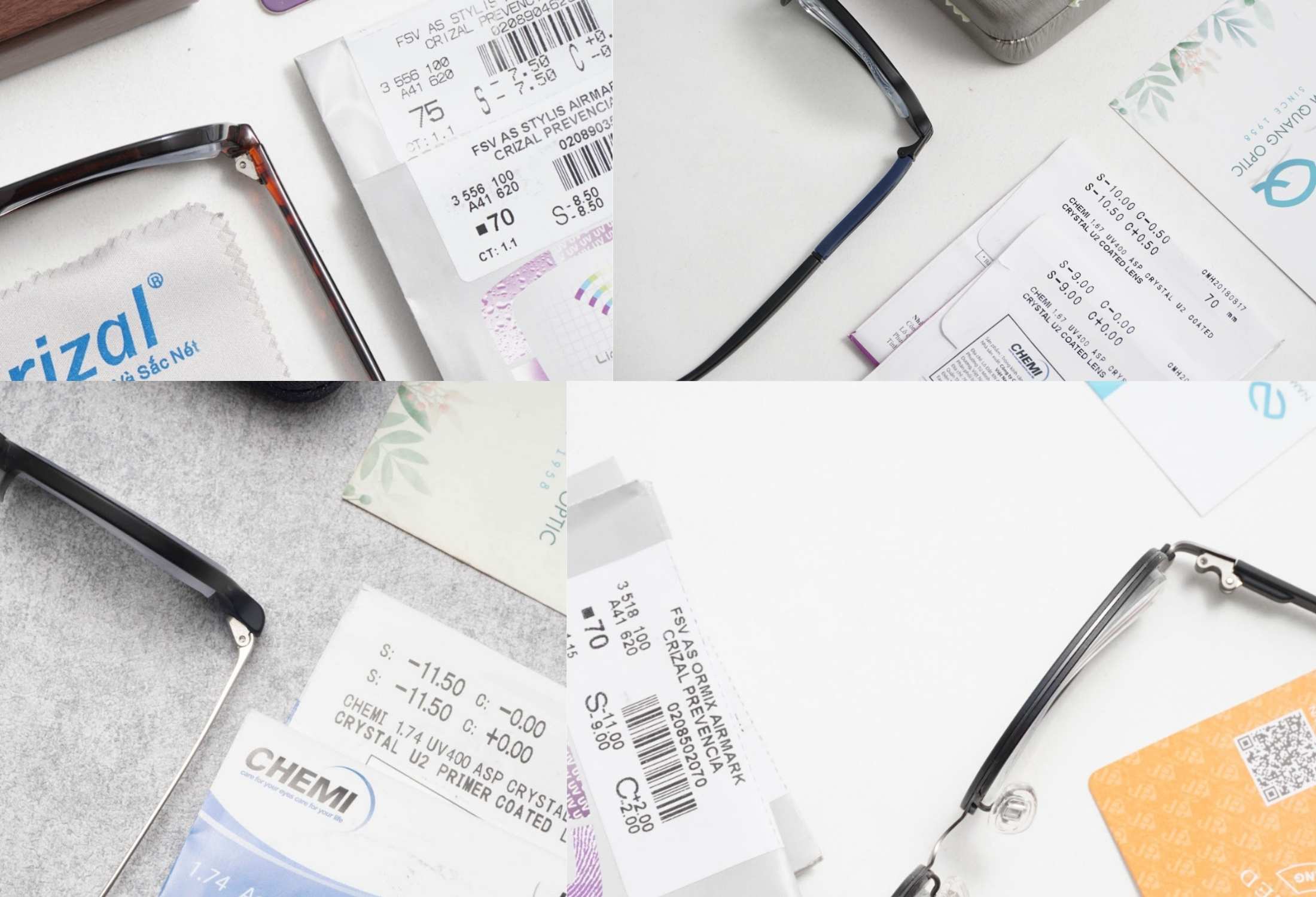
Need help choosing the right lens index for your glasses? Visit Nam Quang Optical at 670 Sư Vạn Hạnh, District 10 or 53 Nguyễn Trãi, District 1 for practical advice on standard and ultra-thin prescription lenses.
FAQ gợi ý
Are ultra-thin prescription lenses better than regular lenses?
They are better for some wearers, especially people with medium to high prescriptions who want lighter and slimmer glasses. They are not automatically necessary for mild prescriptions.
What is the difference between 1.60, 1.67, and 1.74 lenses?
These numbers refer to lens index. Higher index lenses bend light more efficiently, so they can be made thinner for the same prescription. Nam Quang’s guide suggests moving toward 1.67 and 1.74 as prescriptions get stronger.
Do ultra-thin lenses cost more?
Yes. Both the competitor article and Nam Quang’s own lens pages describe higher-index lenses as more expensive than regular options.
Who should choose 1.74 lenses?
Based on Nam Quang’s published guide, 1.74 is mainly recommended for stronger prescriptions, especially around 7.25 and above.
See more: